Anabelle Colaco
05 Jan 2026, 01:58 GMT+10
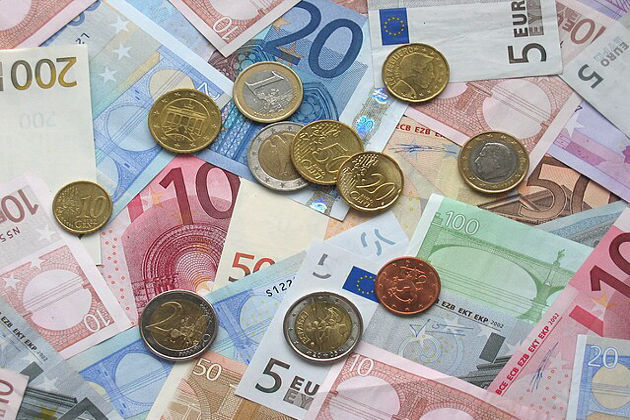
BRUSSELS, Belgium: Bulgaria's entry into the euro zone this week has narrowed the list of European Union countries still using national currencies, but political resistance, fiscal strains, and constitutional barriers mean the bloc's single currency is unlikely to expand much further in the near term.
Bulgaria became the 21st member of the euro zone on January 1, despite opposition from about half of its electorate. That leaves just a small group of the EU's 27 members yet to adopt the common currency. While public backing for the euro remains relatively strong in some of those countries, euroskeptic parties in governments and parliaments are expected to slow or block progress.
Below is a look at the remaining EU countries outside the euro area:
Hungary
Hungary has the strongest public support for euro adoption among the remaining countries, with 72 percent backing entry, according to an October–November Eurobarometer survey conducted for the European Commission.
Opposition leader Peter Magyar has said he would steer the country toward adopting the euro if his centre-right party wins elections next year. However, Prime Minister Viktor Orban's euroscepticism remains a significant obstacle.
Hungary also has the highest debt-to-GDP ratio outside the euro zone in the EU, and efforts to cut budget deficits after the COVID-19 pandemic have stalled due to heavy pre-election spending.
Even if Hungary were to meet all technical criteria, euro adoption would still require a parliamentary supermajority. Orban has enshrined the forint as the national currency in the constitution, making entry politically difficult.
Romania
Romania faces the EU's most significant budget deficit, a challenge that could delay euro adoption for several years as the country works to stabilise its public finances.
Public support for the euro stands at 59 percent, according to Eurobarometer data. However, amid high inflation, austerity measures, and the rise of a far-right movement ahead of elections in 2028, the issue has largely dropped out of public debate.
Poland
In Poland, adoption of the euro has little political momentum. Public support is at 45 percent, but Finance Minister Andrzej Domanski has said the government is not pursuing euro entry and that the country is "happy to have our own currency".
Jaroslaw Kaczynski, leader of the opposition Law and Justice party, has said anyone seeking to introduce the euro was "a mortal enemy of Poland".
Poland remains the EU's largest economy outside the euro zone.
Czech Republic
Public backing for the euro in the Czech Republic is low at 30 percent, according to the Eurobarometer survey, and the government has no plans to take steps toward adoption.
The country's relatively low debt levels compared with those of many eurozone members have fuelled concerns about assuming responsibility for more indebted economies.
Prime Minister Andrej Babis, once pro-euro earlier in his political career, has since shifted to a more nationalist and euroskeptic stance and is now proposing to enshrine the Czech crown in the constitution.
Sweden
Euro adoption remains a marginal issue in Sweden. Only one small party openly supports joining the euro zone, while the populist Sweden Democrats — the second-largest party in parliament and a key supporter of the right-wing minority government — oppose it.
Sweden joined the EU in 1995, but a 2003 referendum rejected the euro by a margin of 56 percent to 42 percent.
Public support currently stands at 39 percent, down sharply from opposition levels of more than 80 percent following the 2012–2013 euro zone debt crisis.
Denmark
Denmark is the only EU country with a formal opt-out from the euro, allowing it to remain outside the currency union even if it meets all entry criteria. The country joined the EU in 1973, and public support for adopting the euro is at 33 percent, according to the Eurobarometer survey.
Get a daily dose of Malaysia Sun news through our daily email, its complimentary and keeps you fully up to date with world and business news as well.
Publish news of your business, community or sports group, personnel appointments, major event and more by submitting a news release to Malaysia Sun.
More InformationBENGALURU, India: After moving from laboratory testing to human use, Neuralink is preparing its next leap: large-scale manufacturing...
MUMBAI, India: A surprise increase in excise duty on cigarettes triggered a sharp selloff in Indian tobacco stocks, as investors weighed...
MUMBAI, India: India's rupee landed 2026 under pressure after logging its steepest annual decline in three years, weighed down by record...
DHAKA, Bangladesh: Bangladesh's first female prime minister, Khaleda Zia, passed away after a prolonged illness. She was 80. Zia...
BEIJING, China: Delivering a stern warning against any attempts toward Taiwanese independence, China's military stationed army, naval,...
MUMBAI, India: Indian banks' asset quality improved to a multi-decadal low at the end of September 2025, according to a report released...
WASHINGTON, D.C: President Donald Trump made a lot of tariff threats and trade promises. Many materialized into new import taxes that...
BRUSSELS, Belgium: Bulgaria's entry into the euro zone this week has narrowed the list of European Union countries still using national...
BURBANK, California: A blockbuster sequel has given Walt Disney Animation Studios a rare win at the global box office. The studio said...
BENGALURU, India: After moving from laboratory testing to human use, Neuralink is preparing its next leap: large-scale manufacturing...
MUMBAI, India: A surprise increase in excise duty on cigarettes triggered a sharp selloff in Indian tobacco stocks, as investors weighed...
OMAHA, Nebraska: One of corporate America's most closely watched handovers begins this week as Berkshire Hathaway transitions leadership...